
Introduction
Most businesses don’t lose leads because they lack demand — they lose leads because their intake is slow, inconsistent, and scattered across inboxes, DMs, forms, and missed calls.
A prospect fills a form… and waits.
A message arrives after hours… and sits unread.
A “hot” lead gets buried under “just browsing” questions.
Meanwhile, AI and automation are becoming standard operating muscle. McKinsey reports 88% of respondents say their organizations use AI in at least one business function (2025). McKinsey & Company And Deloitte reports 74% of organizations say their most advanced GenAI initiative is meeting or exceeding ROI expectations. Deloitte
This post gives you a universal, industry-agnostic blueprint for a lead intake system that turns chaos into a clean pipeline — fast responses, smarter qualification, and reliable follow-up — without turning your business into a tech project.
What is an AI Lead Intake System?
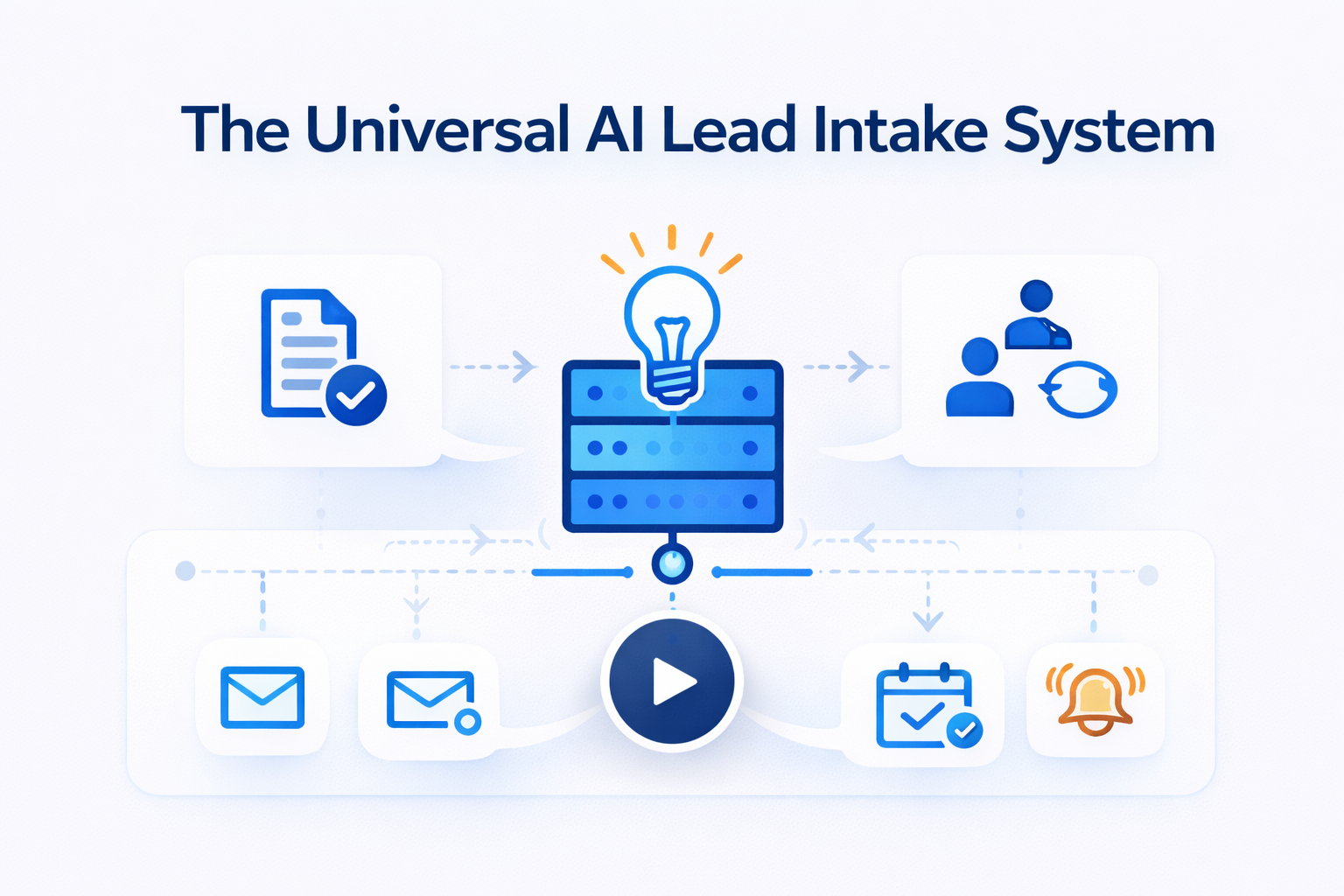
An AI lead intake system is a connected workflow that:
- Captures leads from every channel
- Asks the right questions (without friction)
- Classifies and scores intent automatically
- Routes the lead to the right person/process
- Follows up consistently (and stops when it should)
- Books meetings / triggers next steps
- Logs everything into your CRM with clean data
It’s not “a chatbot.”
It’s not “a CRM.”
It’s the operating layer between attention and revenue.
Why this matters: speed-to-lead + consistency wins
Speed and consistency are still the simplest competitive advantages.
Harvard Business Review’s lead-response research highlights how quickly lead value decays and how many companies respond too slowly. Harvard Business Review In practice, the faster you respond — especially in the first minutes — the more likely you are to connect, qualify, and convert.
Automation gives you something humans can’t deliver reliably at scale:
instant response + perfect follow-through + clean tracking.
The blueprint at a glance
Here’s the universal architecture:
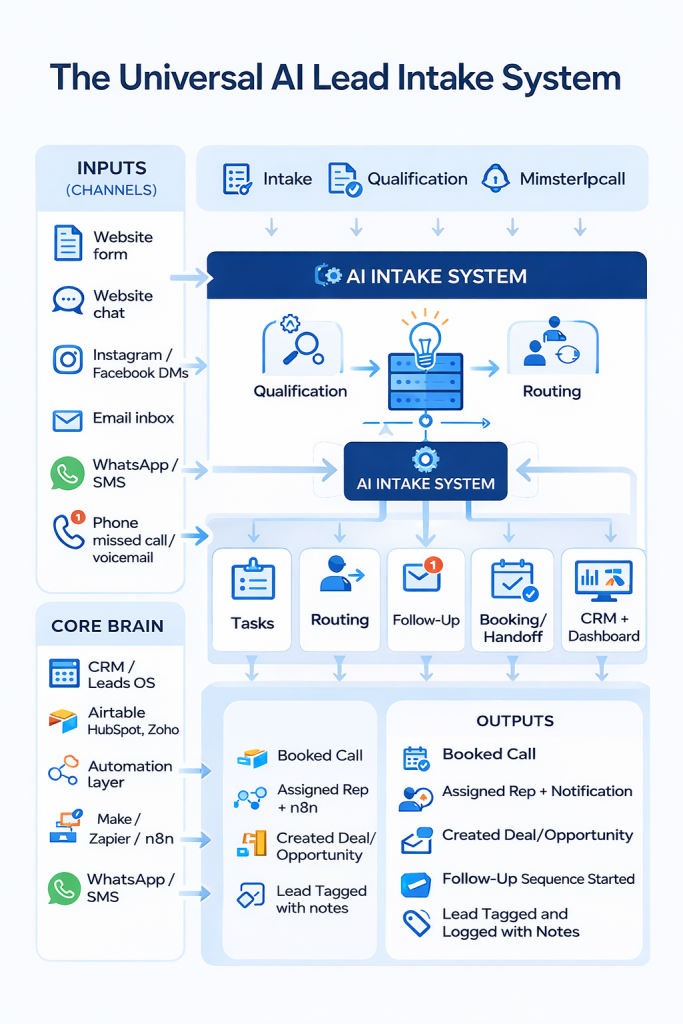
Channels → Intake → Qualification → Routing → Follow-up → Booking/Handoff → CRM + Dashboard
Inputs (channels)
- Website form
- Website chat
- Instagram/Facebook DMs
- Email inbox
- WhatsApp/SMS
- Phone missed call / voicemail
Core brain
- CRM / Leads OS (Airtable, HubSpot, Pipedrive, Zoho, etc.)
- Automation layer (Make.com / Zapier / n8n)
- AI layer (classification, summarization, next-step suggestions)
Outputs
- Booked call
- Assigned rep + notification
- Created deal/opportunity
- Follow-up sequence started
- Lead tagged and logged with notes
Step-by-step: Build the Universal Intake System
1) Capture every lead into one source of truth
Rule #1: No lead stays trapped in a channel.
Every incoming event creates or updates a record:
Minimum fields to store (clean + universal):
- Name (if available)
- Channel (form / email / DM / WhatsApp / phone)
- Contact (email/phone/handle)
- Timestamp (first seen)
- Message summary (AI)
- Status (New / Waiting Info / Qualified / Booked / Lost)
- Score (0–100 or Cold/Warm/Hot)
- Owner (who handles it)
Outcome: every lead becomes visible and trackable.
2) Ask only what you need (friction kills conversion)
The best intake questions are:
- minimal
- easy to answer
- clearly tied to getting the person what they want
Universal intake questions (works for almost any niche):
- “What are you trying to achieve?”
- “What’s your timeline?”
- “What’s your budget range?” (optional, but powerful)
- “What’s the best way to reach you?”
- “Anything else we should know before we suggest next steps?”
Pro move: ask one question at a time (instead of a long form).
3) Use AI to classify intent (without overcomplicating it)
You don’t need “agent swarms.” You need simple classification that makes routing and follow-up smarter.
Have AI output structured fields like:
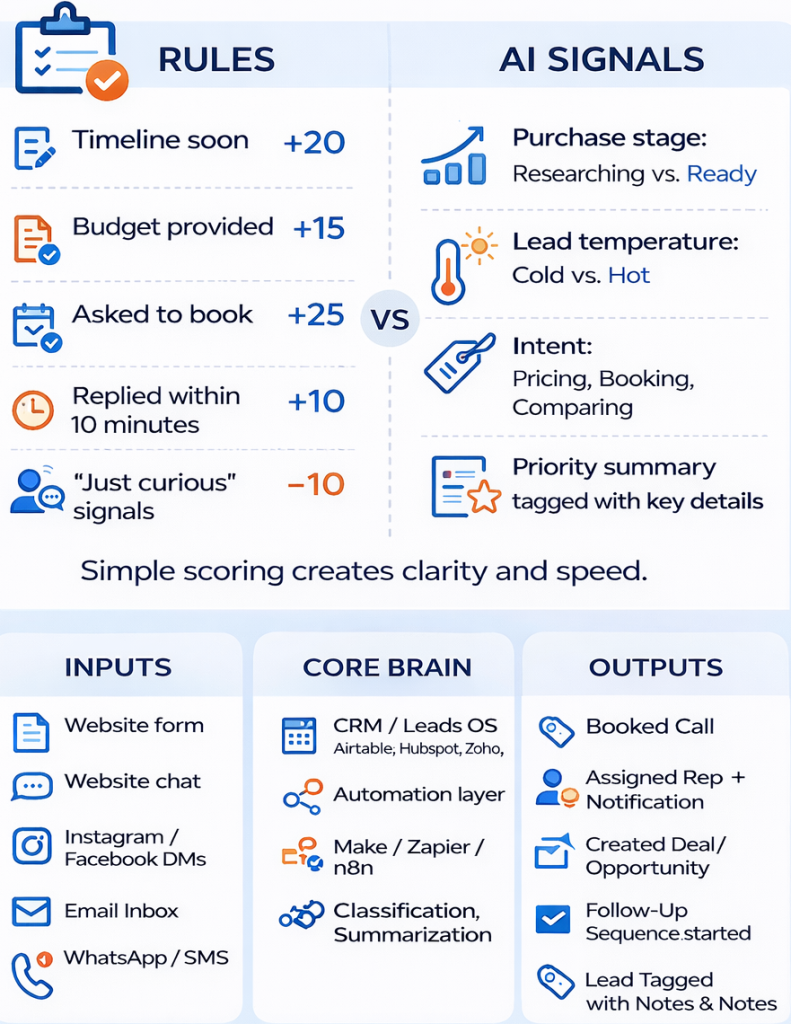
- Intent category (Pricing / Booking / Info / Support / Partnership)
- Lead temperature (Cold/Warm/Hot)
- Purchase stage (Researching / Comparing / Ready)
- Key entities (city, service type, product, timeline)
- One-sentence summary for your team
Result: your CRM becomes readable, and your team responds faster.
4) Score the lead (rules + AI)
Keep scoring transparent. A simple hybrid model works best:
Example scoring factors:
- Timeline soon = +20
- Budget provided = +15
- Asked to book = +25
- Replied within 10 minutes = +10
- Multiple questions / long message = +5
- “Just curious” signals = -10
Result: your system knows who deserves priority now.
5) Route instantly (and notify the right person)
Routing rules are where you win back time.
Examples:
- If Hot → Slack/Email/SMS to sales + assign owner
- If Support → send to support queue
- If Out of scope → polite reply + archive
- If High-value → notify you + auto-create deal
Keep routing simple and visible inside the CRM.
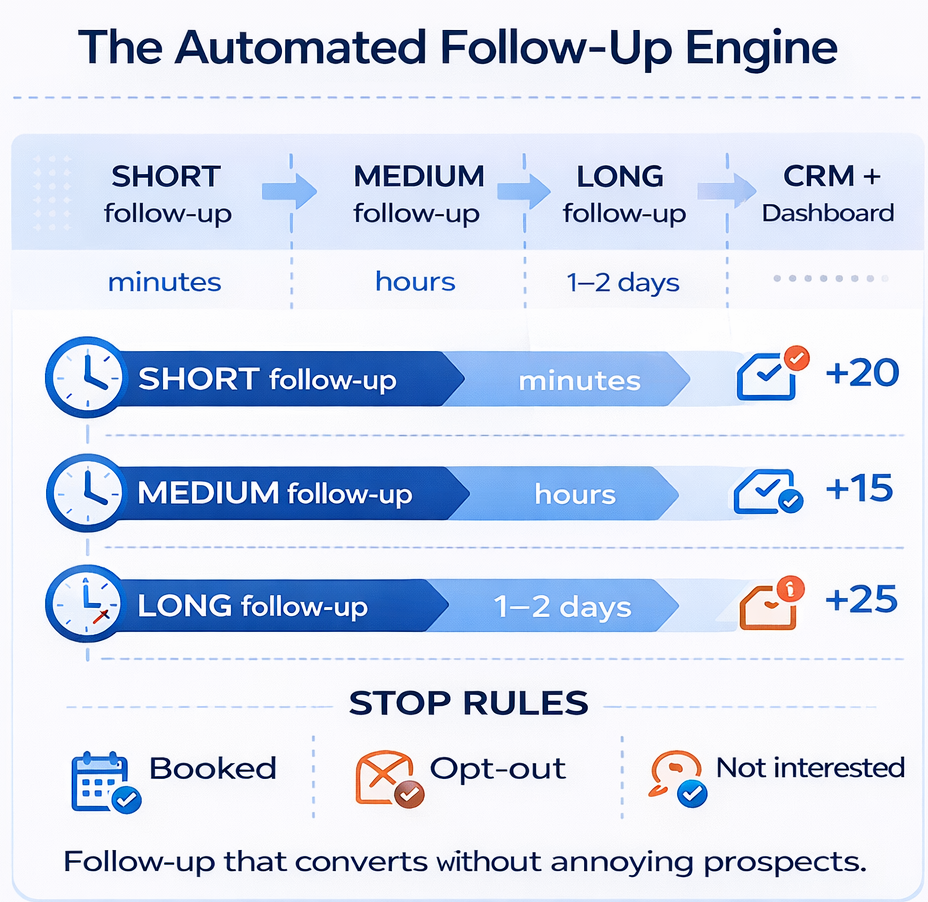
6) Add the Follow-Up Engine (the money layer)
Most businesses don’t need more leads. They need more conversions from the leads they already get.
A universal follow-up engine has:
- Short gap: “Just checking — want me to send options?”
- Medium gap: “Still interested? I can recommend the best next step.”
- Long gap: “Last message — should I close your request for now?”
Hard rules (critical):
- Stop follow-ups if they say “not interested”
- Stop if they unsubscribe / opt out
- Stop once they book
- Stop once a human takes over (unless your process says otherwise)
Result: consistent conversions without annoying people.
7) Booking + handoff (AI supports humans, doesn’t replace them)
Once a lead hits a threshold (Hot / Ready), do one of these:
- Auto-send booking link
- Offer 2–3 time slots
- Ask a single confirmation question
- Notify staff for personal handling
When booked:
- Update status to Booked
- Log booking details
- Trigger reminders (24h, 2h)
- Create a prep task for the rep
8) Add guardrails: consent + trust + brand tone
If you automate outreach or reminders, do it with clean rules:
- Respect opt-outs
- Keep messages short
- Don’t spam
- Make it easy to reach a human
- Log consent state if you operate in regulated contexts
This protects deliverability, brand reputation, and long-term growth.
The stack we recommend (simple + scalable)
You can build this with many tools, but here’s a clean “Systemize-style” stack:
- Leads OS / CRM: Airtable or your client’s CRM
- Automation: Make.com
- Messaging: Gmail/M365 + SMS/WhatsApp provider
- Scheduling: Calendly (or CRM scheduler)
- AI: classification + summaries + reply drafts
- Dashboards: Airtable Interfaces / Looker Studio
This stays lean, productized, and easy to maintain.
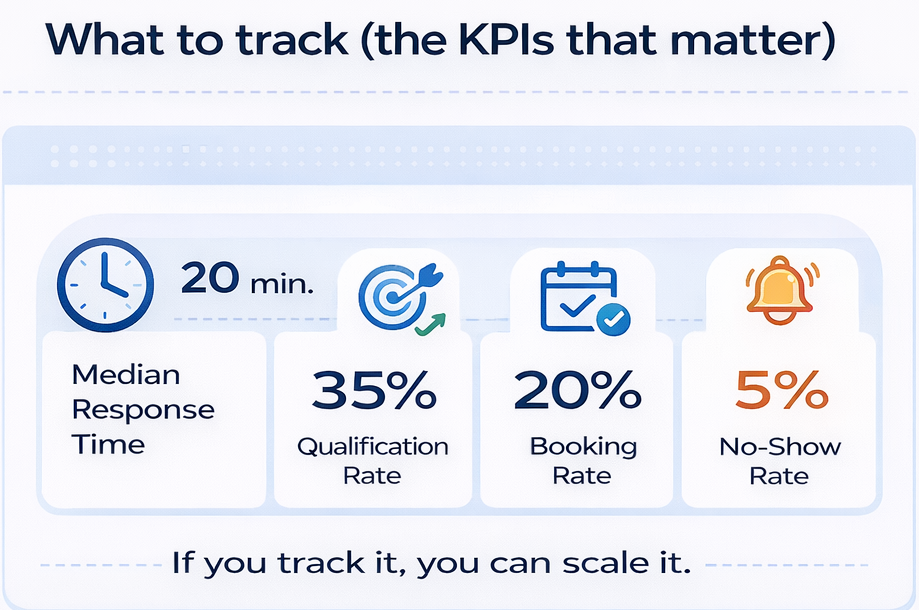
What to track (the KPIs that matter)
Track these weekly:
- Median time to first response
- % leads that become Qualified
- Booking rate (Qualified → Booked)
- Follow-up recovery rate (leads revived by follow-up)
- No-show rate (Booked → Attended)
- Lead source ROI (which channel produces booked calls)
Implementation timeline (fast but realistic)
Week 1: capture + logging + routing
Week 2: classification + scoring + follow-up engine
Week 3: booking + reminders + dashboards
Week 4: optimization (message quality, scoring accuracy, edge cases)
Common mistakes (avoid these)
- Trying to automate everything before you have clean capture
- Over-asking questions early (kills response)
- No stop rules (causes spammy follow-up)
- CRM fields that are messy or inconsistent
- No tracking (you can’t improve what you don’t measure)
Ready to automate your lead intake?
Ready to automate your lead intake?
If you want this built for your business (or for your team/client), Systemize can implement the full intake system as a done-for-you automation:
- Multi-channel capture
- AI qualification + summaries
- Smart routing + follow-ups
- Booking + reminders
- CRM + dashboard setup
If you want an AI-powered intake + follow-up system like this (tailored to your business, your channels, and your team), we can map it and build it for you.
👉 Contact Systemize here: https://systemize.ca/contact/
Sources
- McKinsey (2025) — The State of AI: Global Survey 2025. McKinsey & Company
- Deloitte (2024/2025) — State of Generative AI in the Enterprise (ROI findings). Deloitte
- Harvard Business Review (2011) — The Short Life of Online Sales Leads. Harvard Business Review
- World Economic Forum (2025) — Future of Jobs Report 2025 (jobs created/displaced headline). World Economic Forum

 using WordPress and
No responses yet