
Introduction
AI automation for hair transplant clinics is transforming how modern practices manage leads, scheduling, and patient communication. In today’s competitive hair restoration market, clinics can’t afford to let potential patients slip through the cracks. From the moment someone expresses interest in a hair transplant to the post-procedure follow-ups, every touchpoint is an opportunity to build trust. AI-driven automation is emerging as a game-changer in this journey. It ensures no lead goes cold and no patient feels forgotten. By automating and personalizing outreach at each stage – initial inquiry, consultation scheduling, pre-op and post-op communications – clinics can convert more leads into procedures and turn one-time patients into loyal advocates. According to Deloitte (2024), about 75% of leading healthcare companies are already experimenting with AI to streamline operations and enhance patient experiences (Deloitte, 2024). This trend is rapidly extending to specialty clinics like those in hair restoration. The goal is simple: leverage intelligent automation to create a seamless patient experience from the first click to the follow-up call, transforming leads into lifelong patients.
Never Miss a Lead: Instant Follow-Ups (No More Cold Leads)
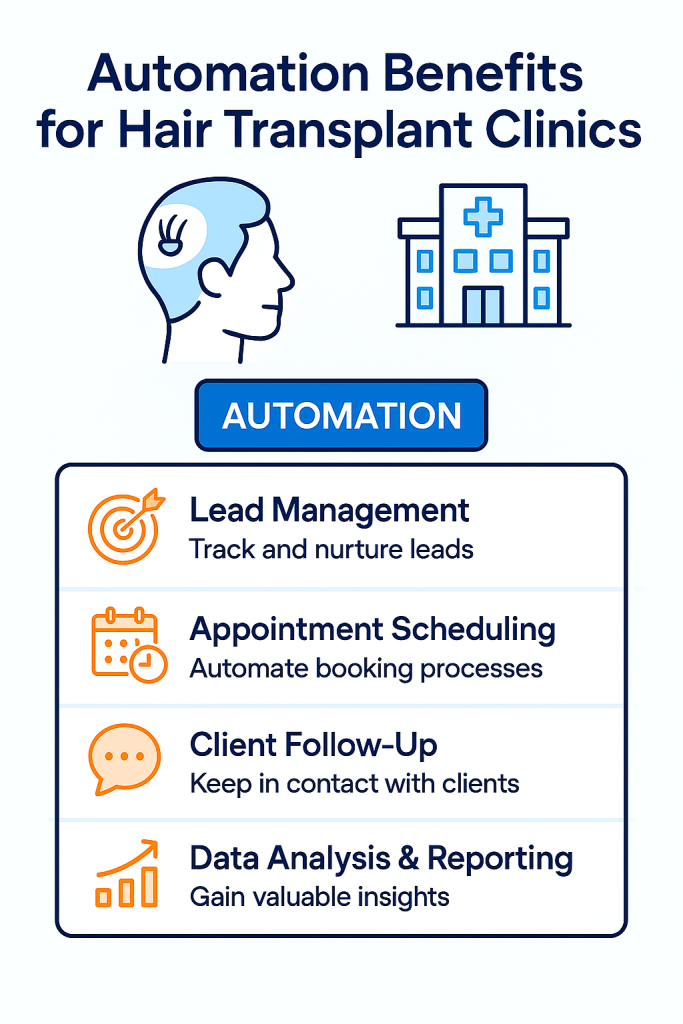
For hair transplant clinics, speed-to-response can make the difference between winning a client or losing them to a competitor. Prospective patients often reach out to multiple clinics; the clinic that responds first frequently wins the patient’s business. Manually following up on inquiries – especially those that come in after hours – can be slow and inconsistent. An AI automation system, however, engages leads immediately via chat or call, 24/7. This instant engagement not only impresses the potential patient but dramatically boosts conversion rates. According to a Harvard Business Review study, leads contacted within 5 minutes are 21× more likely to convert compared to those contacted after 30 minutes (Harvard Business Review via Chili Piper, 2025). In practical terms, if someone messages your clinic at midnight, an AI assistant can respond at 12:01 AM with a friendly greeting, answers to common questions, or even an offer to schedule a consultation. By the time your staff arrives in the morning, that lead might already be on the calendar. In contrast, a purely manual process could mean the lead waited hours or never heard back – and may have moved on.
Speed isn’t the only factor – persistence and multi-channel outreach matter as well. AI patient coordinator systems can automate a sequence of follow-ups via text, email, and even voice calls. This ensures no lead is left unattended. Most clinics traditionally give up after one or two contact attempts, but data shows that polite persistence pays off. Industry research finds your chances of reaching a lead on a follow-up call jump from only 39% on the first attempt to 93% by the sixth attempt (InsideSales.com, as cited in Chili Piper, 2025). With AI automation, those six follow-ups can be scheduled and executed effortlessly across multiple channels. The result? More responses and more booked consultations without burdening your staff. In fact, 78% of customers tend to go with the first responder in the market (Lead Connect, 2025), so being fast and persistent gives your clinic a decisive edge.
Seamless Scheduling and Fewer No-Shows
Once a lead is engaged, the next hurdle is getting them through the clinic doors (or onto a video consultation). Scheduling should be frictionless. If booking an appointment is cumbersome or requires multiple phone calls, potential patients may drop off. AI automation shines here by integrating with online calendars and providing self-service booking options. For example, an AI assistant can offer available time slots in real-time and let the patient confirm an appointment via chat or a simple click. Digital convenience is not just a nice-to-have – it’s often a deal-breaker: 65% of patients say they would switch to a provider that offers more convenient digital booking and communications (Tebra Patient Perspectives, 2025). Furthermore, if your clinic doesn’t offer online scheduling, a recent survey found 59% of patients may choose a competitor that does (BookingLive, 2024).
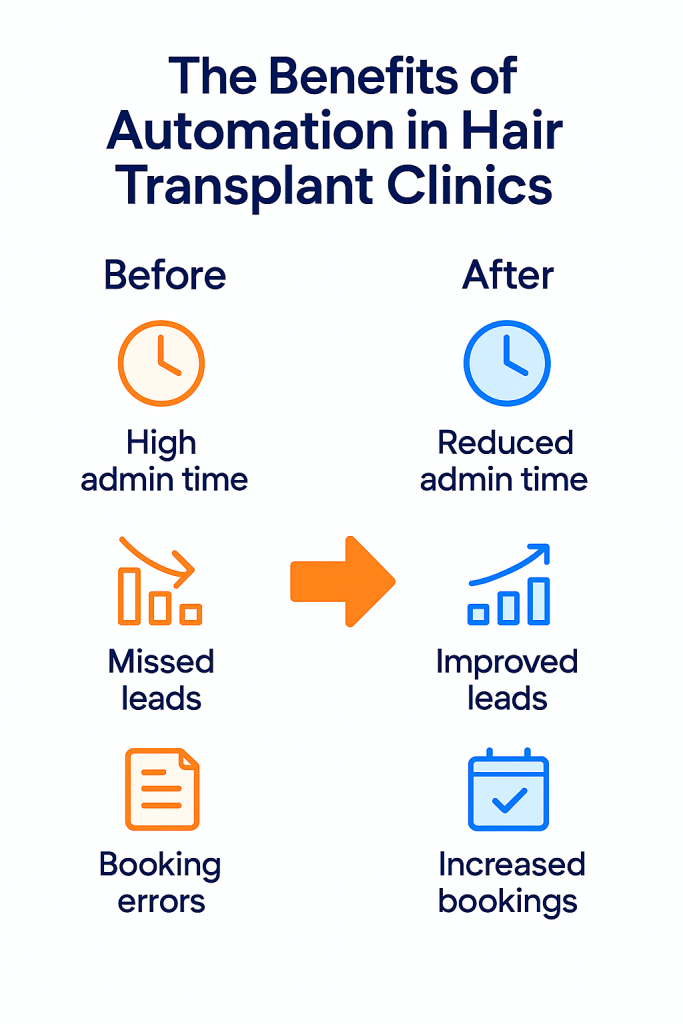
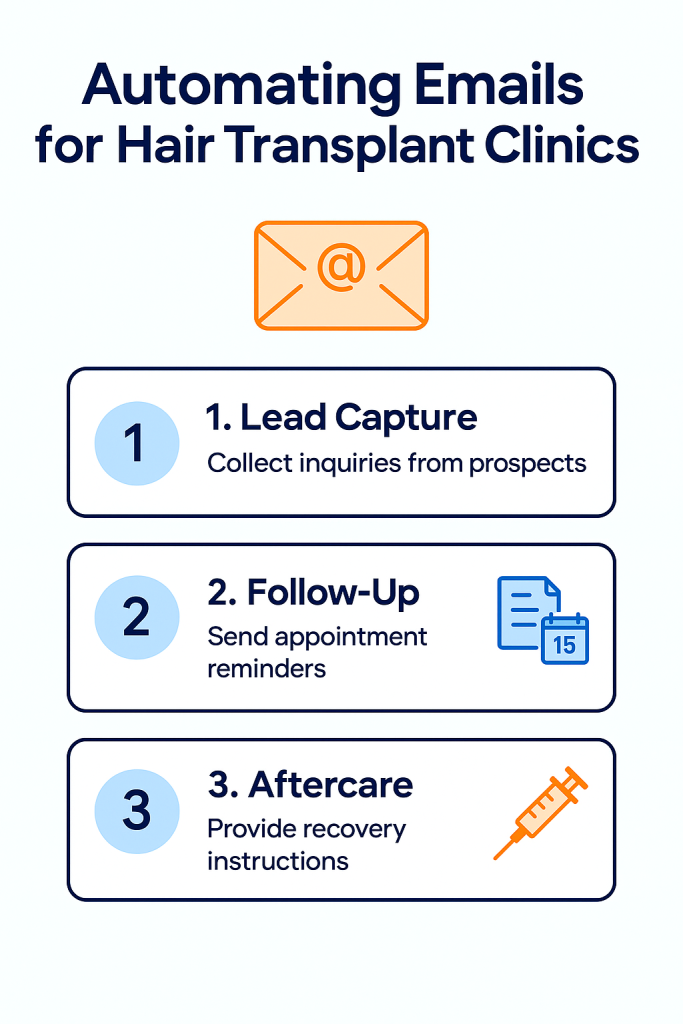
Automation also helps reduce no-shows by sending personalized reminders and preparation instructions. A hair transplant patient might receive an automatic SMS a week before the procedure (“Remember to stop any blood thinners and arrange a ride for surgery day”) and a follow-up reminder 48 hours before the appointment. These touches ensure the patient feels cared for and informed, while also gently nudging them to stay committed. It’s effective: industry data shows 57% of patients now expect automated notifications for things like appointment reminders, and 70% say they’re more likely to choose providers who send such follow-ups (PatientPop via Emorphis, 2022). By meeting these expectations with AI-driven messages, clinics can drastically cut down on no-shows and last-minute cancellations. Fewer no-shows mean a more efficient schedule and steadier revenue for the clinic. By implementing AI automation for hair transplant clinics, practices can reduce admin time, respond faster to inquiries, and improve patient satisfaction.
Personalized Engagement = Loyal Patients
The benefits of AI automation don’t end once the procedure is done. In fact, post-operative engagement is where lasting patient loyalty is forged. Hair transplant patients often require follow-ups to track progress, address concerns, and ensure satisfaction with their results. An AI system can automate much of this outreach while still keeping it personal. For instance, after surgery, the patient might get a sequence of tailored check-ins: “Day 2: How is the swelling? Here are tips,” then a week later, “It’s been one week – remember to come in for your check-up tomorrow,” and later, “It’s month 3 – would you like to share your progress photos or schedule a follow-up consultation?” These communications make patients feel valued beyond the procedure itself. They’re more likely to come back for future treatments or refer friends and family. Patient loyalty is heavily influenced by consistent, caring communication, and AI ensures no patient is forgotten.
Moreover, automation helps turn satisfied patients into advocates. Post-visit, the system can automatically send a quick satisfaction survey or a gentle request for a review on Google or RealSelf. Happy patients are prompted to share their positive experience, boosting your clinic’s reputation. (If there’s an unhappy response, the system can flag it for personal follow-up, giving you a chance to resolve issues promptly.) This kind of responsive engagement has a direct impact on retention. Patients are far less likely to “disappear” after their procedure. In fact, one study in 2025 found that 68% of patients who leave a practice do so because they feel a lack of follow-up or communication – essentially, they feel uncared for (Tebra Patient Perspectives, 2025). AI closes that gap by keeping the conversation going long after the patient leaves the clinic, which fosters trust and long-term loyalty.
Conclusion
AI automation is transforming how hair transplant clinics connect with people – from the first marketing touch to the final post-op follow-up. By automating lead responses, scheduling, reminders, and personalized check-ins, clinics can provide prompt, consistent care that today’s patients not only appreciate but have come to expect. The payoff is significant: higher conversion rates, smoother operations, and most importantly, happier patients who stick with your practice and recommend it to others. In an industry built on results and reputation, leveraging AI to enhance patient communication and experience is quickly moving from an innovation to an imperative. Embracing these tools now positions your hair restoration clinic to turn more leads into loyal, lifelong patients – all while freeing your staff to focus on the human touchpoints that matter most. It’s automation with a human heart, and it’s driving better outcomes for both clinics and patients.
Sources
- Deloitte (2024) – Life Sciences & Health Care Outlook on Generative AI. Findings reported that 75% of leading health care companies are using or exploring AI solutionsdeloitte.com.
- Harvard Business Review via Chili Piper (2025) – Lead Response Time Study. Shows a 5-minute response window yields up to 21× higher lead qualification than a 30-minute delaychilipiper.com.
- PatientPop Survey (2022) – Patient Expectations Report, as cited by Emorphis. Found 57% of patients expect automated appointment reminders and 70% choose providers who offer thememorphis.health.
- Bookinglive Survey (2024) – Highlights that 59% of patients may choose a competitor if online booking isn’t offered (via Pabau)pabau.com. Also, 69% are more likely to book with a clinic that offers online scheduling.
- Tebra Patient Perspectives Survey (2025) – Revealed that 65% of patients would switch to a provider with better digital conveniences, and underscored the impact of fast, responsive communication on loyaltytebra.comtebra.com.

 using WordPress and
No responses yet